Use this set after reading the hazmat outline or when you need a focused check of hazardous materials safety decisions.
Last updated:
Study the weak area
What to understand before you answer.
Hazmat practice combines document reading, hazard recognition, and emergency judgment. It is more useful when you connect every rule to protecting people and isolating hazards.
01
Know why shipping papers, placards, labels, and emergency information matter.
02
Watch for damaged packages, leaks, incompatible materials, and restricted routes.
03
Choose the answer that protects people and prevents the hazard from spreading.
Before the questions
How to improve this score.
Read the hazmat study page.
Answer the practice set.
Review missed explanations and note whether each miss was papers, placards, handling, or emergency response.
Use the recommended weak-area practice before retaking the topic.
Common traps to watch for
Treating shipping papers as ordinary freight paperwork instead of emergency information.
When this pattern appears in a missed answer, review the explanation before trying another set.
Memorizing document terms without understanding their emergency-response purpose.
When this pattern appears in a missed answer, review the explanation before trying another set.
Assuming a sealed trailer removes the driver's need to check paperwork consistency.
When this pattern appears in a missed answer, review the explanation before trying another set.
Thinking placards are administrative labels instead of safety warnings.
When this pattern appears in a missed answer, review the explanation before trying another set.
Checking that a placard exists but not whether it is correct and readable.
When this pattern appears in a missed answer, review the explanation before trying another set.
Practice questions
CDL Hazmat Test 1 Quiz
Answered 0 / 20
Question 1
You are carrying a placarded hazardous materials load. Where should the shipping papers be kept while you are driving?
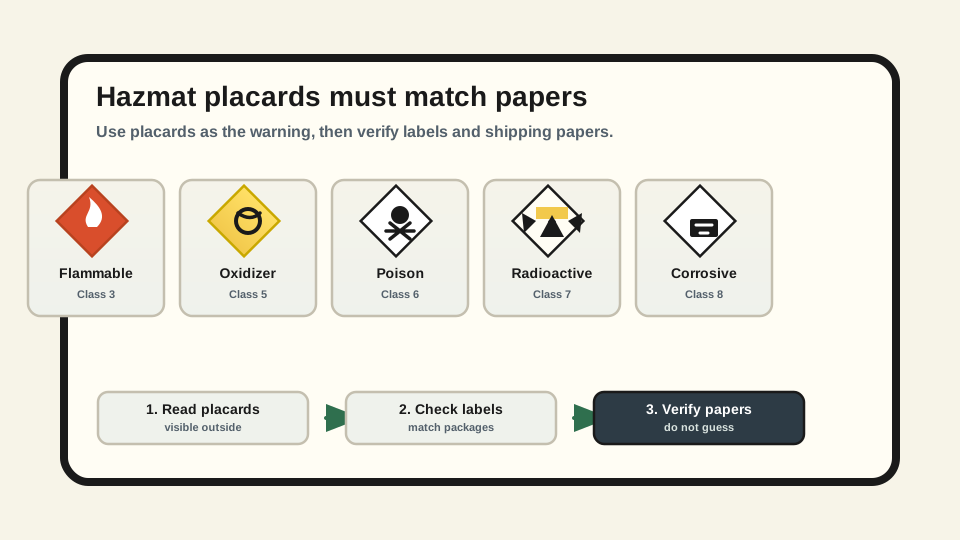
Placards, labels, and shipping papers must work together.
Shipping papers must be easy for the driver and emergency responders to find quickly. Keeping them visible or within immediate reach supports fast identification during an emergency.
Source focusFMCSA CDL Manual - Hazardous Materials: shipping papers and emergency information
Emergency responders may not be able to access paperwork locked inside the trailer.
The papers need to travel with the load, not stay at the office.
Hidden paperwork is not readily available in an emergency.
Study focusKnow where hazardous materials shipping papers should be kept during transportation.
Common trapTreating shipping papers as ordinary freight paperwork instead of emergency information.
Question 2
A shipping paper lists the proper shipping name, hazard class, and identification number. Why are these details important?
The proper shipping name, hazard class, and identification number help identify the hazard and support the correct emergency response.
Source focusFMCSA CDL Manual - Hazardous Materials: shipping paper entries
Shipping papers do not remove placard duties when placards are required.
Route restrictions still apply when a material or route requires them.
The details matter during transportation, especially during emergencies.
Study focusRecognize the purpose of key hazardous materials shipping paper entries.
Common trapMemorizing document terms without understanding their emergency-response purpose.
Question 3
You notice that the shipping papers for a hazmat load do not match the labels on several packages. What should you do before moving the load?
A mismatch between papers and package labels can mean the material is incorrectly described. The issue should be resolved before transportation.
A sealed package can still contain a dangerous hazard.
Label information does not automatically remove placard requirements.
The hazard remains relevant during transportation.
Study focusUse package labels as hazard clues for safe handling decisions.
Common trapIgnoring labels once packages are loaded inside the vehicle.
Question 7
You discover a leaking hazardous materials package during a stop. What is the safest first response?
The safest response is to protect people and use emergency-response information. Drivers should not touch unknown hazardous material or spread contamination.
Damage location does not make an unsafe hazmat package acceptable.
Easy removal does not fix unsafe packaging.
Tape is not a substitute for proper packaging.
Study focusIdentify when damaged hazardous materials packaging should not be accepted.
Common trapTrying to manage damaged packaging during the trip instead of refusing unsafe transport.
Question 12
If a hazmat fire starts near your vehicle and you do not know exactly what material is involved, what is the safest action?
Unknown hazardous materials can react dangerously. The safest action is to protect people, contact emergency help, and use the documented emergency information.
Source focusFMCSA CDL Manual - Hazardous Materials: fire and emergency response
Opening packages can expose the driver and worsen the hazard.
Driving into smoke can put the driver and others at greater risk.
The wrong extinguisher or method can make some hazmat fires worse.
Study focusChoose a safe emergency response when the exact hazardous material is uncertain.
Common trapTaking direct action before identifying the hazard and protecting people.
Question 13
A hazmat package is damaged before loading and you can see residue around the closing. What is the safest decision?
A damaged package can leak or become unsafe in transit. The safe choice is to stop the loading decision until the problem is resolved by the responsible party.
Location in the trailer does not fix a damaged hazmat package.
A driver should not hide or patch a hazard to keep the load moving.
Trailer capacity does not make damaged packaging safe.
Study focusChoose a safe loading decision when hazmat packaging appears damaged.
Common trapTreating damaged packaging as a minor freight problem.
Question 14
You are hauling a placarded load and a route sign restricts hazardous materials through a tunnel. What should you do?
Hazmat route restrictions are safety requirements. The driver should follow allowed routing and should not enter a restricted route to save time.
Source focusFMCSA CDL Manual - Hazardous Materials: routes and restricted areas
Light traffic does not remove a hazmat restriction.
Removing placards to bypass a restriction is unsafe and improper.
Following distance does not make a restricted route allowed.
Study focusRespond correctly to route restrictions for hazardous materials.
Common trapChoosing convenience over routing restrictions.
Question 15
Why should incompatible hazardous materials be separated during loading?
Incompatible materials may create a greater hazard if mixed. Separation rules help prevent fire, toxic gas, contamination, or other dangerous reactions.
Source focusFMCSA CDL Manual - Hazardous Materials: segregation and separation
Cleanliness is not the main safety reason for separation.
Placard duties are not removed by separation.
The hazard can exist on any route.
Study focusUnderstand why separation of incompatible materials matters.
Common trapThinking separation is only a paperwork or loading-space issue.
Question 16
A placarded trailer begins leaking at a rest area. Which first action is usually safest?
A hazmat leak should be treated as a people-protection problem first. Keep people away, avoid contact, and use the required information to guide the emergency response.
Opening doors can expose people or worsen the release.
Continuing the trip can spread the hazard.
Washing unknown material into a drain can create a larger hazard.
Study focusChoose a safe first response to a hazmat leak.
Common trapTrying to move or clean up a material before identifying the hazard.
Question 17
What is the best reason to keep hazmat shipping papers within immediate reach while driving?
Shipping papers identify the material and support emergency response. They must be available quickly because the driver may be injured or unable to explain the load.
Billing is not the safety reason for immediate access.
Paperwork does not replace package inspection.
Shipping papers do not remove route restrictions.
Study focusExplain why hazmat shipping papers must be easy to find.
Common trapTreating shipping papers as ordinary delivery paperwork.
Question 18
A shipping paper is missing the emergency response telephone number when one is required. What should happen before transportation?
Required emergency response information supports quick action during an incident. Missing required information should be corrected before transportation.
Source focusFMCSA CDL Manual - Hazardous Materials: emergency response information
A personal phone number does not replace required emergency information.
Correct placards do not fix incomplete required papers.
Hiding incomplete information makes emergency response harder.
Study focusRecognize missing emergency information on hazmat paperwork.
Common trapAssuming placards alone are enough when required paperwork is incomplete.
Question 19
What do placards primarily communicate?
Placards warn other road users and emergency responders about the hazard class or type of danger associated with the load.
Source focusFMCSA CDL Manual - Hazardous Materials: placards and hazard communication
Placards do not identify the driver.
Delivery timing is not a placard purpose.
Freight price is not a hazard communication item.
Study focusIdentify the safety purpose of hazmat placards.
Common trapThinking placards are only a company or freight label.
Question 20
A placard is torn so the hazard class cannot be read clearly. What should be done before the vehicle moves?
Placards must communicate the hazard clearly. A damaged or unreadable placard defeats its safety purpose and should be corrected before transportation.