Practice for air brake system parts, checks, low-pressure warnings, and safe braking behavior.
Last updated:
Where this page fits
Air brakes: CDL Air Brakes
This page is one checkpoint inside the CDL study guide. Use the map to move between the full outline, topic notes, practice questions, and focused weak-area review.
Use this after reviewing the smaller air brake checkpoints.
Review every missed answer by pressure behavior and driver action.
Air brakes questions usually test system parts, warning devices, pressure loss, parking brakes, air brake test questions, and safe braking decisions.
CDL air brake test questions with explanations
Air compressor, storage tanks, and pressure behavior
Low air pressure warning devices
Spring brakes and parking brake behavior
Air leakage checks and brake tests
Safe braking on grades and low-traction roads
How to study this topic
Why it matters
Air brakes is a specific safety topic where small misunderstandings can lead to unsafe decisions on the road.
What to review
Pair short drills with explanations for pressure loss, warning devices, parking brakes, inspection steps, and the question wording used in air brake practice tests.
Separate parts, tests, and driver response
Air brake learners often mix parts, test questions, and warning behavior. Study those as three layers: what the part does, what the test checks, and what the driver should do when the result is unsafe.
Diagrams
Visual study aids.
Use these diagrams to understand the space, parts, or scoring terms behind the study topic.
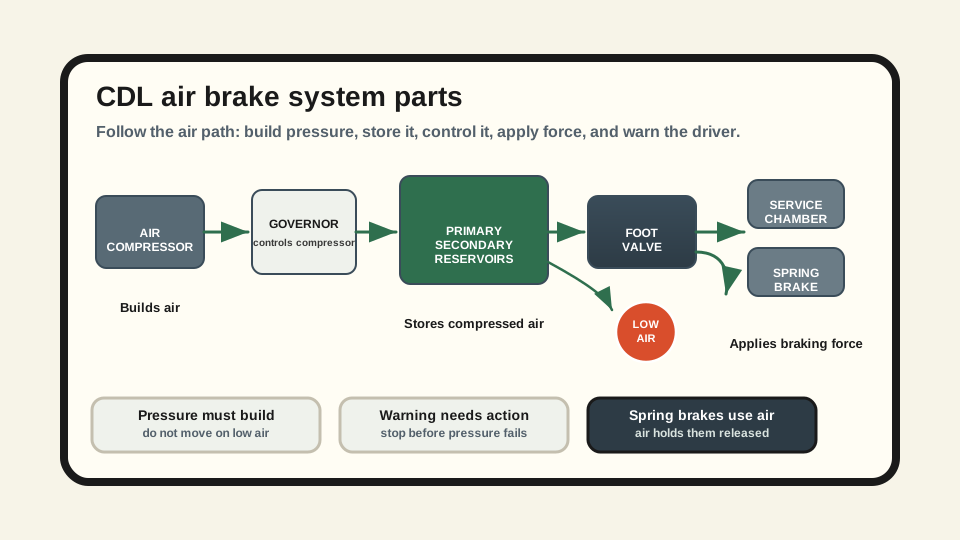
CDL air brake system diagramUse the diagram to connect air brake parts, pressure behavior, warnings, and safe responses.
Quick answers
Answers before you practice.
Short answers for the common CDL questions on this topic.
01
What is on the CDL air brake test?
Air brake questions usually cover system parts, pressure behavior, low air warnings, leakage tests, spring brakes, parking brakes, brake lag, and safe response when the system is not working normally.
What air brake test questions should I practice first?
Start with compressor and governor behavior, warning devices, pressure loss, leakage checks, spring brakes, and the difference between inspection steps and road braking.
A low air warning tells the driver that braking ability may become unsafe if pressure continues to drop. Choose the safe response before the system reaches a dangerous condition.
A leakage test checks whether air pressure drops too much under the test condition. Identify whether the question is about static leakage, applied leakage, or a combination vehicle before answering.
What is the purpose of the air compressor in an air brake system?
Air brake system parts
The air compressor pumps air into the air storage tanks (reservoirs), providing the compressed air needed to operate the braking system.
Study focusUnderstand compressor, governor, reservoir, and air supply behavior.
Common trapConfusing compressor cut-in/cut-out behavior with brake application.
Question 2
When must the low air pressure warning signal come on during an air brake check?
During the air brake check, the low-air warning device must activate before air pressure drops below 55 psi or the level specified by the manufacturer. Current handbooks also describe normal low-air warning activation in the 55-75 psi range, with large buses sometimes warning at a higher pressure.
Study focusRecognize low air pressure warnings and choose the safest response.
Common trapIgnoring a low air warning or waiting until spring brakes apply.
Question 3
What are spring brakes?
Spring brakes are held back by air pressure. If air pressure is lost, the springs expand and apply the brakes automatically. They serve as both the emergency and parking brakes.
Study focusUnderstand how spring brakes and parking brakes behave when air pressure changes.
Common trapAssuming parking brakes work independently of air pressure behavior.
Question 4
How do you test the static air leakage rate on a combination vehicle with air brakes?
For a static leak test (brakes released, engine off), a combination vehicle should not lose more than 3 psi in one minute. A single vehicle should not lose more than 2 psi in one minute.
Study focusApply the correct static and applied air leakage test limits.
Common trapMixing up single-vehicle and combination-vehicle leakage limits.
Question 5
During an applied air leakage rate test, what is the maximum allowable pressure loss for a combination vehicle?
During an applied leak test (engine off, service brakes fully applied by pressing the brake pedal), a combination vehicle must not lose more than 4 psi in one minute.
Study focusApply the correct static and applied air leakage test limits.
Common trapMixing up single-vehicle and combination-vehicle leakage limits.
Question 6
What does the air compressor governor control?
The governor controls when the air compressor pumps air into the reservoirs (cut-in) and when it stops pumping (cut-out) to maintain proper system pressure.
Study focusUnderstand compressor, governor, reservoir, and air supply behavior.
Common trapConfusing compressor cut-in/cut-out behavior with brake application.
Question 7
At what pressure does the air compressor governor typically 'cut out' (stop pumping air)?
The air compressor governor typically cuts out, meaning it stops pumping air into the tanks, when the system reaches its maximum pressure of about 125-130 psi.
Study focusUnderstand compressor, governor, reservoir, and air supply behavior.
Common trapConfusing compressor cut-in/cut-out behavior with brake application.
Question 8
What is the purpose of alcohol evaporators in some air brake systems?
Alcohol evaporators put alcohol into the air system to help prevent moisture in the system from freezing in cold weather, which could cause brake failure.
Study focusUnderstand compressor, governor, reservoir, and air supply behavior.
Common trapConfusing compressor cut-in/cut-out behavior with brake application.
Question 9
Why is it important to drain air storage tanks daily?
Compressed air usually contains water and compressor oil, which can build up in the tanks. If not drained, this mixture can freeze in cold weather and cause brake failure.
Study focusUnderstand compressor, governor, reservoir, and air supply behavior.
Common trapConfusing compressor cut-in/cut-out behavior with brake application.
Question 10
What is 'brake lag' in an air brake system?
Air brakes are not instantaneous like hydraulic brakes. Brake lag is the time required for the air to flow through the lines to all the brake chambers (typically about one-half second).
Study focusIdentify key air brake parts and explain how the system produces braking force.
Common trapMemorizing part names without understanding what each part does.
Question 11
When testing the low pressure warning signal, how should you reduce the air pressure?
To test the warning signal, turn the engine off, leave the key in the 'on' position, and rapidly step on and off the brake pedal. The warning signal must activate before pressure drops below 55 psi or the manufacturer-specified level.
Study focusRecognize low air pressure warnings and choose the safest response.
Common trapIgnoring a low air warning or waiting until spring brakes apply.
Question 12
If the spring brakes apply while you are driving, what should you do?
If air pressure falls below 20-45 psi, the spring brakes will engage automatically and bring the vehicle to a rapid stop. You must steer safely off the road before you lose complete mobility.
Study focusUnderstand how spring brakes and parking brakes behave when air pressure changes.
Common trapAssuming parking brakes work independently of air pressure behavior.
Question 13
What is the proper way to brake on a long, steep downgrade using air brakes?
Rely primarily on engine braking. When you reach your 'safe speed', apply the brakes firmly until you are 5 mph under that speed, then release them. Repeat this process as needed.
Study focusIdentify key air brake parts and explain how the system produces braking force.
Common trapMemorizing part names without understanding what each part does.
Question 14
What causes brake fade?
Brake fade is the loss of braking power caused by excessive heat, usually from riding the brakes on a downgrade. Heat causes the drums to expand away from the brake shoes.
Study focusIdentify key air brake parts and explain how the system produces braking force.
Common trapMemorizing part names without understanding what each part does.
Question 15
What color is the tractor parking brake control valve in the cab?
The tractor parking brake control is a diamond-shaped, yellow, push-pull control knob.
Study focusUnderstand how spring brakes and parking brakes behave when air pressure changes.
Common trapAssuming parking brakes work independently of air pressure behavior.
Question 16
When should you NOT use the parking brake?
Do not use the parking brake if the brakes are extremely hot (they could warp) or if they are very wet in freezing temperatures (they could freeze locked). Use wheel chocks instead.
Study focusUnderstand how spring brakes and parking brakes behave when air pressure changes.
Common trapAssuming parking brakes work independently of air pressure behavior.
Question 17
What does an Anti-Lock Braking System (ABS) do on an air brake equipped vehicle?
ABS only prevents the wheels from locking up during a hard braking event. This allows you to steer around obstacles while stopping, rather than going into an uncontrollable skid.
Study focusIdentify key air brake parts and explain how the system produces braking force.
Common trapMemorizing part names without understanding what each part does.
Question 18
How can you tell if your vehicle is equipped with ABS?
Vehicles built after 1998 are required to have ABS. You can verify this by looking for the yellow ABS malfunction indicator light on the dashboard when turning the key on.
Study focusUse inspection habits to catch unsafe defects before driving.
Common trapChecking only obvious items and missing brake, tire, coupling, or defect-report steps.
Question 19
What is the function of the slack adjusters in an S-cam brake system?
Slack adjusters are mechanical links between the pushrod and camshaft. They are used to adjust the brakes to ensure the shoes remain close enough to the drums as the friction lining wears away.
Study focusIdentify key air brake parts and explain how the system produces braking force.
Common trapMemorizing part names without understanding what each part does.
Question 20
How do you manually check the slack adjusters on S-cam brakes?
To check slack adjusters, you must release the parking brakes so there is no tension on the system. If a slack adjuster moves more than about one inch when pulled by hand, it probably needs adjustment.
Study focusUnderstand how spring brakes and parking brakes behave when air pressure changes.
Common trapAssuming parking brakes work independently of air pressure behavior.
Question 21
What should you do if the air pressure does not build up to normal within the correct amount of time?
If air pressure does not build up fast enough, the pressure may drop too low during driving, requiring an emergency stop. Don't drive until it is fixed.
Study focusRespond safely to hazards, emergencies, traction loss, and unsafe conditions.
Common trapReacting late or using sudden braking/steering when controlled action is safer.
Question 22
What is a dual air brake system?
A dual air brake system has two separate air brake systems (primary and secondary), each with its own air tanks and lines, but both are operated by the same brake pedal.
Study focusIdentify key air brake parts and explain how the system produces braking force.
Common trapMemorizing part names without understanding what each part does.
Question 23
In a dual air brake system, what happens if one system loses air pressure?
If one air system fails, the other will still work. However, the brakes will not work as well, and it will take longer to stop. You should stop safely and park the vehicle until fixed.
Study focusIdentify key air brake parts and explain how the system produces braking force.
Common trapMemorizing part names without understanding what each part does.
Question 24
If your vehicle does not have automatic drain valves, how often should you manually drain moisture from the air tanks?
Air tanks should be drained at the end of each day of driving. Moisture and oil collect in the tanks from the air compressor, and if not drained, they can freeze in cold weather and cause brake failure.
Study focusUnderstand compressor, governor, reservoir, and air supply behavior.
Common trapConfusing compressor cut-in/cut-out behavior with brake application.
Question 25
What is the maximum leakage rate for a straight truck or bus with the engine off and the brakes released?
For a single vehicle (like a straight truck or bus), the static air leakage rate must be less than 2 psi in one minute.
Study focusApply the correct static and applied air leakage test limits.
Common trapMixing up single-vehicle and combination-vehicle leakage limits.
Question 26
What is the purpose of the modulating control valve?
Some vehicles have a control handle on the dashboard that allows you to apply the spring brakes gradually. This modulating valve gives you more control when using spring brakes for an emergency stop.
Study focusUnderstand how spring brakes and parking brakes behave when air pressure changes.
Common trapAssuming parking brakes work independently of air pressure behavior.
Question 27
Why should you be in the proper gear before starting down a hill?
You must downshift before starting down a grade. If you try to downshift after your speed has built up, you will not be able to shift into a lower gear and may lose engine braking entirely.
Study focusUse inspection habits to catch unsafe defects before driving.
Common trapChecking only obvious items and missing brake, tire, coupling, or defect-report steps.
Question 28
If you must make an emergency stop, how should you brake?
In an emergency, you want to stop as quickly as possible without locking the wheels (controlled braking) or locking and releasing (stab braking) so you maintain steering control.
Study focusUse pre-trip inspection habits to identify unsafe vehicle-system defects before driving.
Common trapMemorizing a walk-around order without understanding which defects make the vehicle unsafe.
Question 29
What is 'stab braking'?
Stab braking is an emergency braking technique used on vehicles without ABS. You lock the wheels, release the brakes when they lock, and reapply as soon as they start rolling again.
Study focusRespond safely to hazards, emergencies, traction loss, and unsafe conditions.
Common trapReacting late or using sudden braking/steering when controlled action is safer.
Question 30
How does vehicle weight affect stopping distance with air brakes?
Brakes are designed to work best when the vehicle has a moderate load. A very heavy load increases stopping distance due to momentum, but an empty vehicle also takes longer to stop because it lacks traction and the tires can lock up easily.
Study focusIdentify key air brake parts and explain how the system produces braking force.
Common trapMemorizing part names without understanding what each part does.
Question 31
What is the formula for total stopping distance for a commercial vehicle with air brakes?
Air brakes have an added delay. Total stopping distance is Perception Distance + Reaction Distance + Brake Lag Distance + effective Braking Distance.
Study focusIdentify key air brake parts and explain how the system produces braking force.
Common trapMemorizing part names without understanding what each part does.
Question 32
At 55 mph on dry pavement, about how much distance does brake lag add to your total stopping distance?
Brake lag is about half a second. At 55 mph, a vehicle travels about 32 feet in that half-second before the brakes actually begin to engage.
Study focusChoose safe speed, spacing, and visual search habits for commercial vehicles.
Common trapDriving at passenger-car speeds without accounting for weight, space, weather, or grade.
Question 33
What is the most common type of foundation brake used on heavy commercial vehicles?
The S-cam drum brake is the most common type of foundation brake found on commercial vehicles.
Study focusIdentify key air brake parts and explain how the system produces braking force.
Common trapMemorizing part names without understanding what each part does.
Question 34
When the brakes are applied, the brake shoes are pushed against the:
When you apply the brakes, air pressure pushes the pushrod, turning the S-cam, which forces the brake shoes away from one another and presses them against the inside of the brake drum.
Study focusIdentify key air brake parts and explain how the system produces braking force.
Common trapMemorizing part names without understanding what each part does.
Question 35
What provides the braking power for spring brakes?
Spring brakes rely on the mechanical force of powerful springs. Air pressure is actually used to hold the springs back; when air pressure is released, the springs expand and apply the brakes.
Study focusUnderstand how spring brakes and parking brakes behave when air pressure changes.
Common trapAssuming parking brakes work independently of air pressure behavior.
Question 36
If your vehicle has dual parking control valves, what can you use the separate air tank for?
Some vehicles have a separate air tank with its own control valve to release the spring brakes temporarily. This provides enough air to move the vehicle to a safe location if the primary air is lost.
Study focusUnderstand how spring brakes and parking brakes behave when air pressure changes.
Common trapAssuming parking brakes work independently of air pressure behavior.
Question 37
How do you check that the spring brakes come on automatically?
To test the automatic application of the spring brakes, fan off the air pressure by pumping the brake pedal. The parking brake valve should pop out automatically between 20 and 45 psi.
Study focusUnderstand how spring brakes and parking brakes behave when air pressure changes.
Common trapAssuming parking brakes work independently of air pressure behavior.
Question 38
What is the function of the supply pressure gauge?
The supply pressure gauge (or gauges, in a dual system) tells you how much air pressure is available in the storage tanks.
Study focusUnderstand compressor, governor, reservoir, and air supply behavior.
Common trapConfusing compressor cut-in/cut-out behavior with brake application.
Question 39
What does the application pressure gauge show?
The application pressure gauge shows how much air pressure you are applying to the foundation brakes when you press the brake pedal.
Study focusIdentify key air brake parts and explain how the system produces braking force.
Common trapMemorizing part names without understanding what each part does.
Question 40
When is it safe to leave your vehicle unattended without applying the parking brakes or chocking the wheels?
Never leave your vehicle unattended without applying the parking brakes or chocking the wheels. A heavy vehicle can easily roll and cause catastrophic damage.
Study focusUnderstand how spring brakes and parking brakes behave when air pressure changes.
Common trapAssuming parking brakes work independently of air pressure behavior.
Question 41
During a low air pressure warning test, what should happen before tank pressure drops below 55 psi or the manufacturer-specified level?
The low air warning must activate before pressure drops below 55 psi or the manufacturer-specified level so the driver has time to respond before braking ability becomes unsafe.
Study focusRecognize low air pressure warnings and choose the safest response.
Common trapIgnoring a low air warning or waiting until spring brakes apply.
Question 42
If the low air warning signal does not work during the air brake check, what is the safest decision?
A missing low air warning is a serious safety defect because the driver may not know when air pressure has dropped to an unsafe level.
Study focusRecognize low air pressure warnings and choose the safest response.
Common trapIgnoring a low air warning or waiting until spring brakes apply.
Question 43
Which step belongs to an applied air leakage test?
An applied air leakage test checks pressure loss while the service brake pedal is held down with the engine off and the parking brake released.
Study focusApply the correct static and applied air leakage test limits.
Common trapMixing up single-vehicle and combination-vehicle leakage limits.
Question 44
Why is too much pressure loss during an air leakage test unsafe?
Excessive air leakage means the brake system may not hold enough pressure for reliable braking, so the defect must be corrected before safe operation.
Study focusApply the correct static and applied air leakage test limits.
Common trapMixing up single-vehicle and combination-vehicle leakage limits.
Question 45
During the air brake check, what does the low air warning test confirm?
The low air warning should alert the driver before pressure reaches a dangerous level. If the warning does not work correctly, the vehicle should not be driven.
Source focusCDL Manual - Air Brakes: low air warning
Study focusUnderstand the purpose of the low air warning test.
Common trapTreating low air warning behavior as optional.
Question 46
What should you do if the low air warning does not activate during the test?
A failed warning can leave the driver unaware of dangerous pressure loss. The system should be fixed before the vehicle is operated.
Source focusCDL Manual - Air Brakes: low air warning
Study focusChoose a safe response to failed low air warning behavior.
Common trapContinuing to drive after an air warning device fails.
Question 47
Why should air tanks be drained?
Compressed air can carry moisture and oil into the tanks. Draining tanks helps prevent freezing and system problems.
Source focusCDL Manual - Air Brakes: air tanks
Study focusExplain why air storage tanks are drained.
Common trapThinking tank draining is unrelated to brake safety.
Question 48
What does the air compressor governor control?
The governor controls compressor cut-in and cut-out pressure. It manages when air pressure is built in the system.
Source focusCDL Manual - Air Brakes: compressor governor
Study focusIdentify the compressor governor function.
Common trapConfusing air supply control with brake application.
Question 49
If the compressor cut-out pressure is much higher than normal, why is that a concern?
Air brake pressure must stay within safe operating range. Abnormal cut-out behavior can signal a system problem.
Source focusCDL Manual - Air Brakes: compressor and governor
Study focusRecognize abnormal governor pressure behavior as a safety issue.
Common trapAssuming higher pressure is always better.
Question 50
Why does brake lag matter in an air brake vehicle?
Air brakes have a delay between pedal application and brake action. Drivers must account for this extra distance.
Source focusCDL Manual - Air Brakes: brake lag
Study focusExplain brake lag and why it affects stopping distance.
Common trapUsing passenger-car stopping expectations with air brakes.
Question 51
What should you avoid doing with the trailer hand valve?
The trailer hand valve is not for parking or normal braking. Improper use can cause trailer skid or loss of control.
Source focusCDL Manual - Air Brakes and Combination Vehicles: trailer hand valve
Study focusUse trailer brake controls safely.
Common trapUsing the trailer hand valve as a routine stopping or parking tool.
Question 52
What is the safest response if the air pressure warning comes on while driving?
A low air warning means braking ability may soon be unsafe. The driver should stop safely and not continue normally.
Source focusCDL Manual - Air Brakes: low air warning
Study focusChoose the safe driver response to a low air warning.
Common trapWaiting until spring brakes apply before stopping.
Question 53
What do spring brakes normally do when air pressure drops too low?
Spring brakes are held back by air pressure. If pressure drops too low, the springs can apply the brakes.
Source focusCDL Manual - Air Brakes: spring brakes
Study focusUnderstand spring brake behavior when pressure drops.
Common trapThinking air pressure applies spring brakes instead of holding them back.
Question 54
Why should you not fan the brake pedal unnecessarily in an air brake vehicle?
Repeated brake applications use air. Unnecessary fanning can reduce system pressure and leave less reserve for safe braking.
Source focusCDL Manual - Air Brakes: using air brakes
Study focusAvoid unnecessary air loss from repeated brake applications.
Common trapUsing passenger-car brake pumping habits with air brakes.
Question 55
In an applied leakage test, what makes the test different from a static leakage test?
Applied leakage measures pressure loss while the service brakes are applied. Static leakage checks pressure loss with brakes released.
Source focusCDL Manual - Air Brakes: leakage tests
Study focusDistinguish applied leakage from static leakage.
Common trapMixing up static and applied leakage procedures.
Question 56
Why do combination vehicles have a higher allowed leakage limit than single vehicles during some tests?
Combination vehicles have more components in the air system, so some allowed leakage limits differ. The limit still matters and unsafe loss must be corrected.
Source focusCDL Manual - Air Brakes: leakage tests
Study focusExplain why leakage limits differ by vehicle type.
Common trapUsing one leakage limit for every vehicle type.
Question 57
What does the supply pressure gauge show?
The supply pressure gauge tells the driver how much air pressure is available in the reservoirs.
Source focusCDL Manual - Air Brakes: gauges
Study focusIdentify the purpose of the supply pressure gauge.
Common trapConfusing supply pressure with brake temperature or pedal travel.
Question 58
What is the safest reason to test the parking brake before driving?
The parking brake must hold the vehicle when parked. It is not a normal service brake for highway stopping.
Source focusCDL Manual - Air Brakes: parking brake check
Study focusUnderstand why the parking brake is tested.
Common trapThinking the parking brake is for routine slowing.
Question 59
What is the safest braking approach on a long downgrade with air brakes?
Grades require speed planning, proper gear, and controlled braking. Riding brakes can overheat them and reduce braking ability.
Source focusCDL Manual - Air Brakes: braking on downgrades
Study focusApply safe air-brake use on downgrades.
Common trapRelying on constant brake pressure instead of planned speed control.
Question 60
What does ABS help prevent during hard braking?
ABS helps prevent wheel lockup during hard braking, which can help preserve steering control. It does not remove all stopping-distance or traction limits.
Source focusCDL Manual - Air Brakes: ABS
Study focusUnderstand what ABS does and does not do.
Common trapThinking ABS removes the need for safe speed and space.
Question 61
If the ABS warning light stays on after the bulb check, what should you understand?
An ABS warning light that stays on can indicate an ABS fault. The regular brakes may still work, but the system should be checked.
Source focusCDL Manual - Air Brakes: ABS warning light
Study focusRecognize ABS warning light behavior.
Common trapIgnoring warning lights because the vehicle still moves.
Question 62
Why should brake drums or discs not have cracks longer than allowed?
Brake drums and discs are safety-critical parts. Cracks can indicate a defect that affects braking strength and reliability.
Source focusCDL Manual - Air Brakes: foundation brakes
Study focusRecognize foundation brake defects during inspection.
Common trapChecking air pressure but ignoring foundation brake defects.
Question 63
What is the safest interpretation of slow air pressure buildup during a pre-trip check?
Slow pressure buildup can mean the system will not maintain safe pressure during operation. It should be checked before driving.
Source focusCDL Manual - Air Brakes: air pressure buildup
Study focusIdentify slow pressure buildup as an air-brake safety issue.
Common trapWaiting for the system to improve during the trip.
Question 64
During an air brake inspection, why should you wait for normal air pressure before moving?
Air brakes depend on stored air pressure. Moving before normal pressure is reached can leave the vehicle without safe braking reserve.
Source focusCDL Manual - Air Brakes: air pressure buildup
Study focusConfirm adequate air pressure before operating an air brake vehicle.
Common trapStarting to drive before the system has built safe pressure.
Question 65
What does slow air pressure buildup during a pre-trip check usually indicate?
Slow pressure buildup can signal compressor, leak, or system problems. The vehicle should not be operated until the issue is addressed.
Source focusCDL Manual - Air Brakes: air pressure buildup test
Study focusIdentify slow air pressure buildup as a safety defect.
Common trapTreating slow pressure buildup as a normal delay.
Question 66
What is the safest reason to monitor air gauges while driving?
Air pressure gauges give critical information about braking reserve. Abnormal pressure loss needs immediate safe response.
Source focusCDL Manual - Air Brakes: air pressure gauges
Study focusUse air gauges to monitor brake system safety while driving.
Common trapWaiting for a warning light instead of watching pressure trends.
Question 67
If one part of a dual air brake system fails, what is the safest assumption?
A dual system provides separation, but a failure still reduces braking capacity and requires safe stopping and repair.
Source focusCDL Manual - Air Brakes: dual air brake systems
Study focusRespond safely to partial dual air brake system failure.
Common trapThinking a dual system means one failure can be ignored.
Question 68
What is the safest meaning of an air leak you can hear during inspection?
Audible air leaks can reduce brake pressure and reserve. They should be inspected and corrected before operation.
Source focusCDL Manual - Air Brakes: air leakage
Study focusRecognize audible air leaks as safety defects.
Common trapIgnoring a leak because pressure still builds temporarily.
Question 69
Why should you not use spring brakes for normal slowing?
Spring brakes are designed for parking and emergency application. Normal slowing should be done with the service brakes.
Source focusCDL Manual - Air Brakes: spring brakes
Study focusUse spring brakes for their intended parking and emergency role.
Common trapUsing parking or spring brakes as ordinary slowing tools.
Question 70
What should you do if the parking brake will not hold during a pre-trip test?
A parking brake that will not hold is a serious defect. It should be corrected before the vehicle is operated.
Source focusCDL Manual - Air Brakes: parking brake test
Study focusRespond safely to a failed parking brake test.
Common trapTreating parking brake failure as less important than service brake failure.
Question 71
What does an application pressure gauge help the driver understand?
The application pressure gauge shows pressure used for brake application, which helps the driver understand braking demand.
Source focusCDL Manual - Air Brakes: application pressure gauge
Study focusIdentify the function of the application pressure gauge.
Common trapConfusing supply pressure with application pressure.
Question 72
Why should you avoid riding the brakes on a downgrade?
Overheated brakes can lose effectiveness. Proper gear selection and controlled braking help manage speed safely.
Source focusCDL Manual - Air Brakes: mountain driving
Study focusAvoid brake overheating on downgrades.
Common trapHolding light brake pressure continuously down a long grade.
Question 73
What is the safest way to begin a long downgrade with air brakes?
The safe downgrade setup happens before the descent. Gear and speed should be established before the vehicle is pulled downhill.
Source focusCDL Manual - Air Brakes: proper braking on downgrades
Study focusSet up air brake vehicle control before descending a grade.
Common trapTrying to recover control after entering the grade too fast.
Question 74
What does ABS not do for an air brake vehicle?
ABS is a safety aid, not a substitute for safe driving. Speed, space, and judgment still matter.
Source focusCDL Manual - Air Brakes: ABS
Study focusUnderstand ABS limits in air brake vehicles.
Common trapThinking ABS lets the driver follow closer or drive faster.
Question 75
If the ABS light stays on, what should you still remember about normal braking?
An ABS warning means the anti-lock feature may have a fault. The driver should understand the warning and have the vehicle checked.
Source focusCDL Manual - Air Brakes: ABS warning light
Study focusInterpret an ABS warning without confusing it with total brake loss.
Common trapMisreading ABS warnings as either harmless or total brake failure.
Question 76
Why should you never disconnect a low air warning device?
The low air warning is a critical safety warning. Without it, the driver may not know pressure is falling toward an unsafe level.
Source focusCDL Manual - Air Brakes: low air warning
Study focusRecognize the safety role of low air warnings.
Common trapTreating warning devices as nuisance alarms.
Question 77
What should you do if air pressure drops rapidly while applying the brakes during a test?
Rapid pressure loss under application can indicate a serious leak. The vehicle should not be driven until the problem is corrected.
Source focusCDL Manual - Air Brakes: applied leakage test
Study focusRespond safely to excessive applied air pressure loss.
Common trapPassing an air brake check without respecting pressure-loss limits.
Question 78
What is the safest reason to check slack adjusters where manual checks are required?
Slack adjusters help maintain proper brake adjustment. Excessive slack can mean reduced braking force.
Source focusCDL Manual - Air Brakes: slack adjusters
Study focusConnect slack adjuster condition to brake effectiveness.
Common trapMemorizing the part name without understanding brake adjustment.
Question 79
What should you understand about automatic slack adjusters?
Automatic slack adjusters do not remove inspection responsibility. Drivers still need to know if brakes are safe.
Source focusCDL Manual - Air Brakes: automatic slack adjusters
Study focusInspect automatic slack adjusters as part of brake safety.
Common trapAssuming automatic adjustment means no inspection is needed.
Question 80
Why should you not leave an air brake vehicle unattended without securing it correctly?
A parked commercial vehicle must be secured. Parking brakes and wheel chocks are used according to situation and rules to prevent movement.
Source focusCDL Manual - Air Brakes: parking
Study focusSecure an unattended air brake vehicle.
Common trapAssuming service brakes hold a parked vehicle after the driver leaves.