Practice CDL Class B study topics for heavy single vehicles, inspection, air brakes, passenger vehicles, and safe driving decisions.
Where this page fits
Core CDL knowledge: CDL Class B Practice Test
This page is one checkpoint inside the CDL study guide. Use the map to move between the full outline, topic notes, practice questions, and focused weak-area review.
Choose topics by vehicle and endorsement path.
Keep inspection and safe driving as the base.
Add passenger, school bus, tank, or air brake review only when needed.
A Class B path usually focuses on heavy single vehicles, but the exact study plan depends on the vehicle and endorsements. Start with general knowledge, then add air brakes, passenger, school bus, tank, or skills-test topics when they apply.
General knowledge, inspection, speed, space, and hazard response
Air brake systems when the vehicle uses air brakes
Passenger or school bus topics when the job path involves riders or students
Tank vehicle topics when the vehicle or load requires that endorsement
Basic control and on-road habits for a large single vehicle
How to study this topic
Match study topics to the vehicle
Class B does not mean every endorsement applies. Choose passenger, school bus, tank, or air brake review only when that vehicle path requires it.
Inspection still drives the study plan
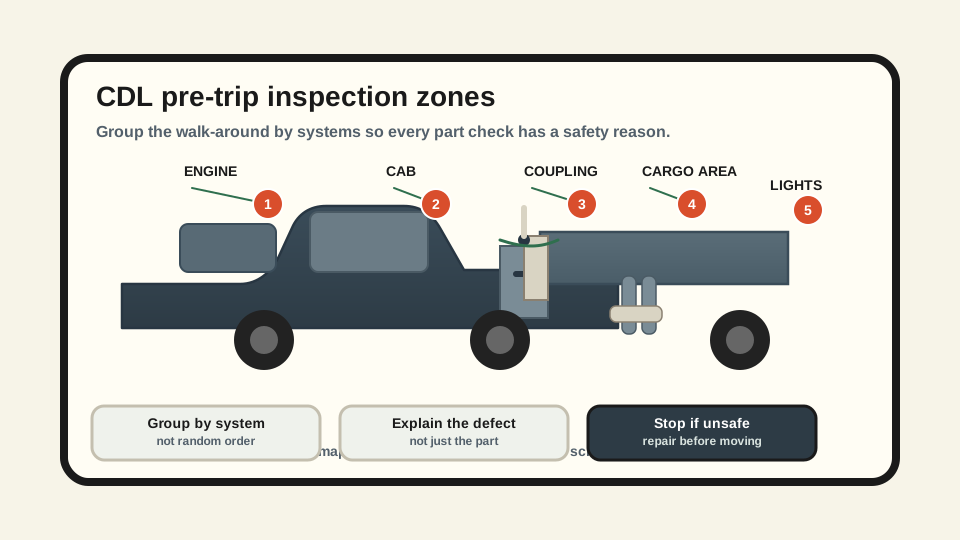
Heavy single vehicles still need careful checks of brakes, tires, lights, steering, suspension, emergency equipment, leaks, and driver visibility before movement.
Practice judgment, not only facts
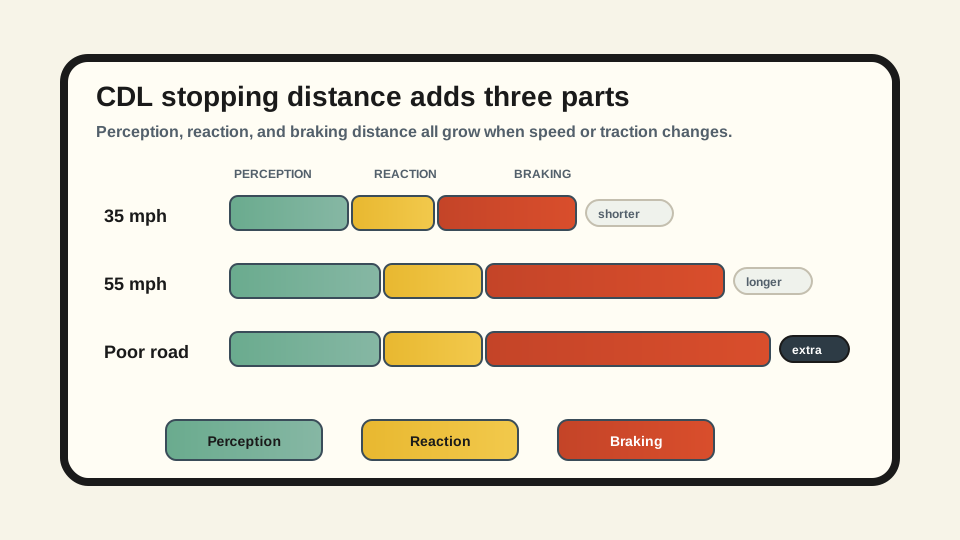
Class B questions often ask what the driver should do when visibility, stopping distance, passenger safety, or vehicle condition changes.
Quick answers
Answers before you practice.
Short answers for the search questions behind this CDL page.
01
What is on a CDL Class B practice test?
A Class B study set should cover general knowledge, vehicle inspection, speed and space decisions, air brakes when applicable, and the endorsement topics required for the vehicle or job.
Do Class B drivers need passenger or school bus topics?
Only study passenger or school bus material when your vehicle path requires those endorsements. A straight truck, bus, tank vehicle, and school bus can create very different Class B study plans.
Class B usually has less combination-vehicle content, but it still tests inspection, braking, large-vehicle control, road judgment, and any required endorsements. Easier depends on the vehicle and your weak areas.
Start with general knowledge and vehicle inspection. Then add air brakes, passenger, school bus, tank, or skills-test practice only when those topics match the vehicle you will train or test with.
Practice questions
CDL Class B Practice Test Quiz
Answered 0 / 20
Question 1
When backing a commercial vehicle, which of the following is the most important safety rule?
Because of blind spots, you cannot see everything behind you. Using a helper is the most important safety rule for backing. Always agree on a hand signal for 'stop' before you begin.
Study focusUse safe backing, turning, and basic-control habits.
Common trapBacking without a helper or failing to stop when visibility is uncertain.
Question 2
How far ahead should you be looking while driving a commercial vehicle at highway speeds?
Good drivers look 12 to 15 seconds ahead. At highway speeds, this is about a quarter of a mile. This gives you time to adjust speed or change lanes to avoid hazards.
Study focusChoose safe speed, spacing, and visual search habits for commercial vehicles.
Common trapDriving at passenger-car speeds without accounting for weight, space, weather, or grade.
Question 3
What is the minimum tread depth required for the front steering tires of a commercial vehicle?
Federal regulations require a minimum tread depth of 4/32 inch in every major groove on front (steering) tires. Other tires require at least 2/32 inch.
Study focusUse pre-trip inspection habits to identify unsafe vehicle-system defects before driving.
Common trapMemorizing a walk-around order without understanding which defects make the vehicle unsafe.
Question 4
When is it appropriate to use your high beams?
Use high beams whenever you can to see further ahead, provided it is safe and legal. You must dim them when within 500 feet of an oncoming vehicle or when following another vehicle within 500 feet.
Study focusApply core CDL safe-driving rules to common road and vehicle situations.
Common trapMemorizing rules without applying them to driving scenarios.
Question 5
What is 'hydroplaning'?
Hydroplaning occurs when water builds up in front of your tires, causing them to lift off the road surface. You lose steering and braking control. To recover, release the accelerator and do not brake hard.
Study focusUse pre-trip inspection habits to identify unsafe vehicle-system defects before driving.
Common trapMemorizing a walk-around order without understanding which defects make the vehicle unsafe.
Question 6
If you experience a tire blowout while driving at highway speeds, what is the FIRST thing you should do?
When a tire blows out, grip the steering wheel firmly and stay off the brakes. Braking hard can cause a skid or loss of control. Let the vehicle slow down naturally before applying brakes gently.
Study focusUse pre-trip inspection habits to identify unsafe vehicle-system defects before driving.
Common trapMemorizing a walk-around order without understanding which defects make the vehicle unsafe.
Question 7
What is the purpose of a pre-trip inspection?
Safety is the most important reason for a pre-trip inspection. Finding and fixing a defect before driving helps prevent breakdowns and crashes on the road.
Study focusUse pre-trip inspection habits to identify unsafe vehicle-system defects before driving.
Common trapMemorizing a walk-around order without understanding which defects make the vehicle unsafe.
Question 8
What is the recommended following distance for a heavy vehicle traveling at 55 mph in ideal conditions?
The rule of thumb is 1 second of following distance for every 10 feet of vehicle length at speeds under 40 mph. For speeds over 40 mph, add 1 additional second. A 60-foot truck at 55 mph needs 7 seconds of space.
Study focusChoose safe speed, spacing, and visual search habits for commercial vehicles.
Common trapDriving at passenger-car speeds without accounting for weight, space, weather, or grade.
Question 9
What should you do if you are being tailgated?
If you are being tailgated, increase the space in front of your vehicle. This allows you to brake more smoothly and gradually, reducing the chance that the tailgater will crash into your rear.
Study focusChoose safe speed, spacing, and visual search habits for commercial vehicles.
Common trapDriving at passenger-car speeds without accounting for weight, space, weather, or grade.
Question 10
When approaching a curve, what is the best way to handle your speed?
You should brake to a safe speed before entering a curve. Once in the curve, maintain speed or accelerate slightly, as this helps stabilize the vehicle. Never brake hard in a curve.
Study focusChoose safe speed, spacing, and visual search habits for commercial vehicles.
Common trapDriving at passenger-car speeds without accounting for weight, space, weather, or grade.
Question 11
What is the most common cause of serious vehicle skids?
Most serious skids result from driving too fast for road conditions, over-braking, over-steering, or over-accelerating. Speed is the primary factor in losing traction.
Study focusUse pre-trip inspection habits to identify unsafe vehicle-system defects before driving.
Common trapMemorizing a walk-around order without understanding which defects make the vehicle unsafe.
Question 12
When driving a commercial vehicle, how should you adjust your speed for driving at night?
At night, your visibility is limited to the reach of your headlights. You must adjust your speed so you can safely stop within that visible distance.
Study focusUse inspection habits to catch unsafe defects before driving.
Common trapChecking only obvious items and missing brake, tire, coupling, or defect-report steps.
Question 13
What is the most important reason for inspecting your vehicle?
While avoiding fines is good, safety is the primary reason for inspections. A defect found during an inspection can prevent a breakdown or fatal crash.
Study focusUse inspection habits to catch unsafe defects before driving.
Common trapChecking only obvious items and missing brake, tire, coupling, or defect-report steps.
Question 14
When should you check your mirrors while driving?
You should check your mirrors regularly (about every 5 to 8 seconds) to be aware of traffic around you and to monitor your vehicle and trailer.
Study focusChoose safe speed, spacing, and visual search habits for commercial vehicles.
Common trapDriving at passenger-car speeds without accounting for weight, space, weather, or grade.
Question 15
What is the primary cause of fatal crashes involving commercial vehicles?
Speeding or driving too fast for conditions is the leading cause of fatal crashes involving large trucks.
Study focusChoose safe speed, spacing, and visual search habits for commercial vehicles.
Common trapDriving at passenger-car speeds without accounting for weight, space, weather, or grade.
Question 16
If you are driving a 60-foot truck at 50 mph, what is the minimum following distance you should maintain?
The rule is 1 second per 10 feet of length, plus 1 second if going over 40 mph. For a 60-foot truck, that is 6 seconds + 1 second = 7 seconds.
Study focusChoose safe speed, spacing, and visual search habits for commercial vehicles.
Common trapDriving at passenger-car speeds without accounting for weight, space, weather, or grade.
Question 17
What should you do if an aggressive driver is harassing you?
To deal with an aggressive driver, do not engage. Get out of their way, avoid eye contact, ignore gestures, and report them if they are a severe danger.
Study focusChoose safe speed, spacing, and visual search habits for commercial vehicles.
Common trapDriving at passenger-car speeds without accounting for weight, space, weather, or grade.
Question 18
What is the best way to use the brake pedal on a steep downgrade?
The 'snubbing' technique involves braking firmly to 5 mph below your safe speed, then releasing them to allow cooling, repeating as necessary while the engine brake does most of the work.
Study focusChoose safe speed, spacing, and visual search habits for commercial vehicles.
Common trapDriving at passenger-car speeds without accounting for weight, space, weather, or grade.
Question 19
When backing, why should you back toward the driver's side whenever possible?
Backing toward the driver's side (sight-side backing) allows you to see the path of the trailer directly out your window, rather than relying solely on mirrors for the blind side.
Study focusUse safe backing, turning, and basic-control habits.
Common trapBacking without a helper or failing to stop when visibility is uncertain.
Question 20
How can you tell if the road is becoming slippery due to dropping temperatures?
Mirrors and antennas are exposed to the cold air and will freeze before the road surface. If ice forms on them, be prepared for black ice on the road.
Study focusChoose safe speed, spacing, and visual search habits for commercial vehicles.
Common trapDriving at passenger-car speeds without accounting for weight, space, weather, or grade.