Class A

CDL Class A Practice Test

Study and practice CDL Class A topics for combination vehicles, air brakes, pre-trip inspection, and safe road control.

Where this page fits

Core CDL knowledge: CDL Class A Practice Test

This page is one checkpoint inside the CDL study guide. Use the map to move between the full outline, topic notes, practice questions, and focused weak-area review.

  • Picture the full combination, including trailer path and coupling points.
  • Review general knowledge before class-specific practice.
  • Use state sources for application and testing process details.

What to study for a CDL Class A path

A Class A path usually brings combination vehicle control into the study plan. Start with the CDL foundation, then add coupling, trailer movement, air brakes when required, pre-trip inspection, and skills-test habits.

  • General knowledge before class-specific topics
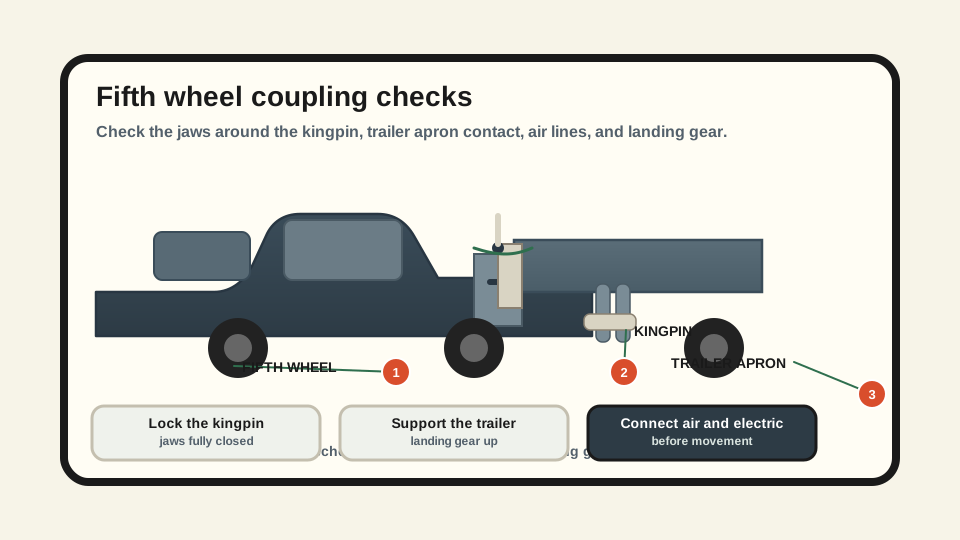
  • Combination vehicle coupling, trailer movement, and off-tracking
  • Air brakes when the planned vehicle uses an air brake system
  • Pre-trip inspection for tractor, trailer, coupling, tires, brakes, lights, and cargo
  • Basic control and road-test habits for longer combinations

How to study this topic

Start with the vehicle combination

A Class A learner should picture the full vehicle path: tractor, trailer, coupling points, rear-wheel path, stopping distance, and space needed for turns.

Do not skip the core CDL topics

Class A practice still depends on general knowledge. Inspection, speed, space, hazards, communication, and driver fitness all appear before the class-specific details make sense.

Use state sources for process details

JSEA can help with study order and practice. Your state agency controls application steps, documents, fees, testing appointments, and local handbook details.

Quick answers

Answers before you practice.

Short answers for the search questions behind this CDL page.

01

What is on a CDL Class A practice test?

A Class A study set should cover general knowledge, combination vehicle control, coupling, trailer movement, pre-trip inspection, and air brakes when the vehicle uses an air brake system.

Study combination vehicles
02

Does a Class A CDL always include air brakes?

Not every Class A path is identical, but many Class A vehicles use air brakes. Study air brakes when your training or test vehicle uses them, and verify any restriction rules through your state CDL agency.

Review air brakes
03

How is Class A different from Class B?

Class A is normally the combination-vehicle path, while Class B is normally a heavy single-vehicle path. The exact class depends on the vehicle configuration and official weight-rating rules.

Compare Class B study
04

What should a new Class A learner study first?

Begin with CDL general knowledge, then add combination vehicles, air brakes if applicable, pre-trip inspection, and basic control skills. Do not jump straight into trailer questions without the core safety foundation.

Start general knowledge
Practice questions

CDL Class A Practice Test Quiz

Answered 0 / 20
Question 1

Why is the risk of a rollover higher in a combination vehicle compared to a single vehicle?

Question 2

What is 'off-tracking' (or 'cheating') in a combination vehicle?

Question 3

Which part of the kingpin should the locking jaws close around?

Question 4

What color are the trailer air lines (glad hands) usually painted?

Question 5

What is the purpose of the trailer hand valve (trolley valve or Johnson bar)?

Question 6

When coupling a semi-trailer, how should you test that the fifth wheel jaws have locked around the kingpin?

Question 7

Before backing under a trailer, what should you do with the trailer height?

Question 8

What causes a trailer jackknife?

Question 9

Where should the tractor be positioned when uncoupling a trailer?

Question 10

After uncoupling a trailer, what is a crucial safety step before driving away?

Question 11

What should you check regarding the space between the upper and lower fifth wheel after coupling?

Question 12

What is the 'crack-the-whip' effect?

Question 13

How can you prevent a rollover?

Question 14

Why should you never use the trailer hand valve while driving?

Question 15

What does a trailer relay valve do?

Question 16

Where are the glad hands located?

Question 17

How do you connect the glad hands?

Question 18

What are 'dummy couplers' (dead-end receptacles)?

Question 19

When testing the trailer service brakes with the trailer hand valve, you should hear:

Question 20

What is the apron of the trailer?

Keep practicing

Choose what to practice next.