Study topic

CDL Communication, Alertness, and Driver Fitness

Study signaling, visibility, distractions, aggressive drivers, fatigue, alcohol, drugs, and safe driver condition.

Last updated:

Where this page fits

Core CDL knowledge: CDL Communication, Alertness, and Driver Fitness

This page is one checkpoint inside the CDL study guide. Use the map to move between the full outline, topic notes, practice questions, and focused weak-area review.

  • Use signals, brake timing, lane position, lights, and horn use as communication tools.
  • Protect focus when distraction, fatigue, alcohol, drugs, or aggression appears.
  • Choose predictable movement over last-second communication.

How to study communication and driver fitness

This area connects how you communicate with other road users to whether you are fit, alert, and focused enough to make safe commercial driving decisions.

  • Signals, brake timing, horn use, lights, and lane position
  • Mirror checks and early communication before lane changes or turns
  • Distracted driving and aggressive-driver response
  • Alcohol, drugs, fatigue, and staying alert
  • How driver condition changes stopping, lane-change, and hazard-response decisions
  • Safe stopping when the driver or vehicle is no longer ready

How to study this topic

Communication is more than a turn signal

A CDL driver communicates through signals, brake timing, lane position, lights, horn use when appropriate, and predictable movement around other road users.

Distractions change the safest answer

Phone use, eating, reading, passenger conflict, fatigue, or aggressive drivers can remove attention from the road. The safer answer protects focus and vehicle control.

Driver fitness is part of safety

Alcohol, drugs, fatigue, illness, and reduced alertness are not side topics. They affect reaction time, judgment, and the ability to control a heavy vehicle.

Wrong answers usually keep driving too long

Communication and alertness questions often include answers that delay action, hide fatigue, argue with another driver, or keep moving while attention is compromised. The safer CDL answer creates space, communicates early, and stops safely when the driver is no longer fit to continue.

Connect this topic to every road situation

Signaling, mirror checks, speed changes, horn use, and lane position all matter because other road users need time to understand what a large vehicle is doing. Practice these questions as part of lane changes, turns, stops, railroad crossings, and emergency responses rather than as isolated rules.

Practice questions

CDL Communication, Alertness, and Driver Fitness Quiz

Answered 0 / 14
Question 1

How far ahead should you be looking while driving a commercial vehicle at highway speeds?

Question 2

When is it appropriate to use your high beams?

Question 3

Why should you avoid using the engine brake (Jake brake) on wet or icy roads?

Question 4

What is the recommended following distance for a heavy vehicle traveling at 55 mph in ideal conditions?

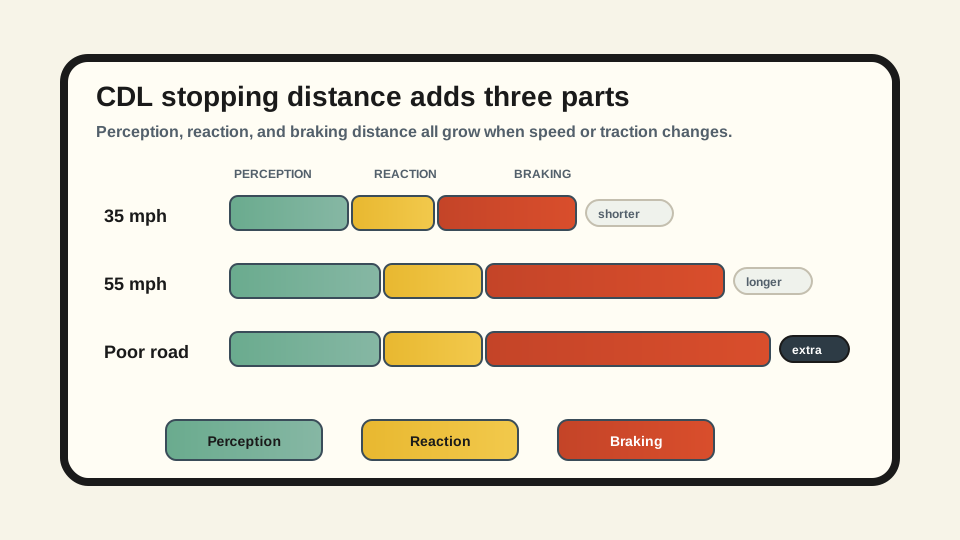
CDL stopping distance chart showing perception, reaction, and braking distance.
Stopping distance includes perception, reaction, and braking time.
Question 5

Which of these is a sign of distracted driving?

Question 6

What should you do if you are being tailgated?

Question 7

When approaching a curve, what is the best way to handle your speed?

Question 8

What must you do when placing warning devices (triangles) on a two-lane road with traffic in both directions?

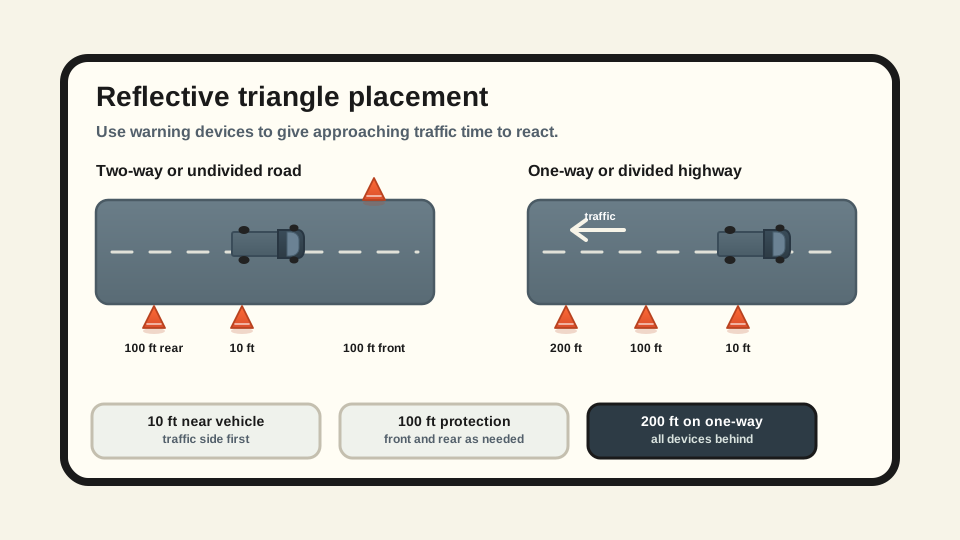
CDL reflective triangles placement diagram around a stopped commercial vehicle.
Warning-device placement depends on road type and traffic direction.
Question 9

If you must pull over to the shoulder on a highway, how quickly must you place your warning devices?

Question 10

What should you do if your vehicle begins to hydroplane?

Question 11

What is black ice?

Question 12

When should you check your mirrors while driving?

Question 13

What is the primary cause of fatal crashes involving commercial vehicles?

Question 14

If you are driving a 60-foot truck at 50 mph, what is the minimum following distance you should maintain?

Keep practicing

Choose what to practice next.