Practice CDL road signs, warning devices, reflective triangles, wig wag context, emergency equipment, and safety-question wording.
Last updated:
Where this page fits
Core CDL knowledge: CDL Road Signs and Safety Equipment Test
This page is one checkpoint inside the CDL study guide. Use the map to move between the full outline, topic notes, practice questions, and focused weak-area review.
Read signs as early speed, lane, space, or hazard decisions.
Connect warning devices to scene protection after a stop.
Use air brake and inspection pages when warning-signal questions repeat.
Road signs and safety equipment questions test whether the driver recognizes warnings early and protects the scene after a stop or emergency. Study the sign, the equipment, and the driver action together.
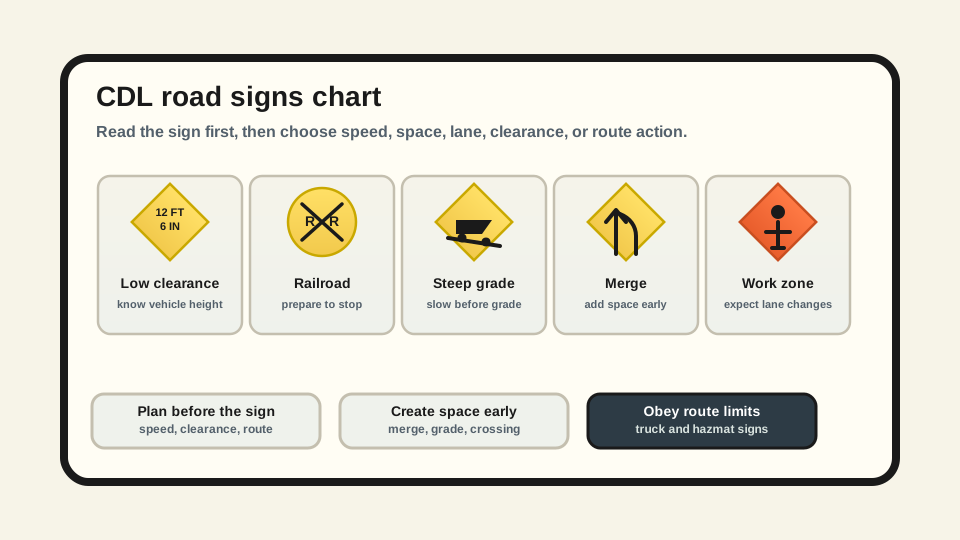
Road-sign language for grades, curves, work zones, railroad crossings, clearance, merging, and speed changes
Emergency equipment such as warning devices, fire extinguishers, spare fuses when applicable, and inspection checks
Reflective triangle questions and why stopped vehicles need early warning for traffic
Wig wag and warning-signal language in air brake and low-pressure contexts
How signs and equipment connect to speed, space, visibility, and hazard response
How to study this topic
Read signs as early decisions
A warning sign is useful only if the driver reacts early enough. CDL answers usually reduce speed, add space, choose the proper lane, or prepare for a crossing before the vehicle is committed.
Equipment questions test scene protection
Warning devices, lights, and emergency equipment are part of protecting a stopped vehicle or unsafe situation so other traffic has time to respond.
Connect signs to weak areas
If you miss road-sign questions, review the related skill: grades and curves belong with speed management, railroad crossings with hazard response, and warning signals with air brakes or inspection.
Make sign questions practical
Road signs are not trivia for CDL learners. A grade, clearance, railroad crossing, lane restriction, or hazmat route sign should trigger a driving action before the vehicle is committed.
Diagrams
Visual study aids.
Use these diagrams to understand the space, parts, or scoring terms behind the study topic.
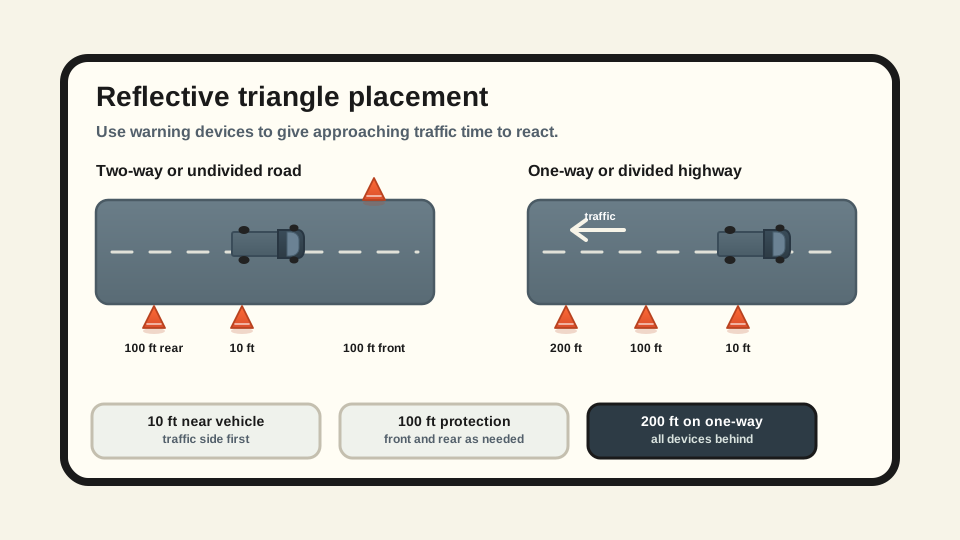
CDL road signs chartRead signs as early driving decisions: slow down, add space, check clearance, choose a lane, or change route.CDL reflective triangles placement diagramWarning devices give approaching traffic time to see and react to a stopped commercial vehicle.
Quick answers
Answers before you practice.
Short answers for the common CDL questions on this topic.
01
How many red reflective triangles should a CDL driver carry?
CDL study materials commonly teach that commercial drivers need three red reflective triangles or approved warning devices. Check the official handbook and federal or state rules for current equipment requirements.
In CDL study, wig wag usually refers to a warning device or signal connected to air brake warning context. The key idea is not the nickname; it is that a low-pressure or warning signal requires safe action.
CDL drivers should pay special attention to grade, curve, speed, railroad crossing, bridge clearance, weight, lane restriction, merge, work zone, and hazardous-material routing signs.
Is a CDL road signs test separate from general knowledge?
Some state processes may present signs separately, but road-sign knowledge also appears inside general knowledge, permit practice, and road-test preparation because signs change speed, lane position, and hazard decisions.
05
What is on a CDL road signs test?
CDL road sign questions often focus on grades, curves, railroad crossings, bridge clearance, lane restrictions, merges, work zones, speed changes, hazmat routes, and warning-device decisions.
Study warning devices, fire extinguishers, spare fuses when applicable, lights, emergency equipment, and inspection checks that help protect a stopped or unsafe vehicle.
Practice questions
CDL Road Signs and Safety Equipment Test Quiz
Answered 0 / 18
Question 1
Which study habit best connects the signs in this CDL road signs chart?
CDL road signs chart
CDL sign questions are practical driving decisions. A sign can change safe speed, lane position, following distance, clearance, or route legality before the vehicle reaches the hazard.
Study focusUse road signs to make early route, speed, space, and clearance decisions.
Common trapStudying road signs as symbols without connecting each sign to a safe driving action.
Question 2
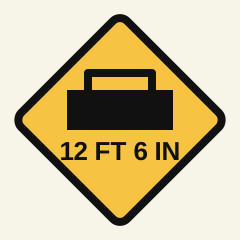
What should a CDL driver do when approaching this low-clearance sign?
Low clearance warning
Low-clearance signs require early route and height decisions. A commercial driver should know the vehicle height and avoid a structure that the vehicle cannot safely clear.
Study focusUse road signs to make early route, speed, space, and clearance decisions.
Common trapTreating a warning sign as information only instead of changing the driving plan early.
Question 3
What does this railroad crossing advance warning sign tell a CDL driver to prepare for?
Railroad crossing advance warning
A railroad warning sign gives the driver time to slow, scan, and decide whether a stop is required. Commercial vehicles need enough space to clear the tracks safely.
Study focusUse road signs to make early route, speed, space, and clearance decisions.
Common trapWaiting until the vehicle is already at the tracks before making the crossing decision.
Question 4
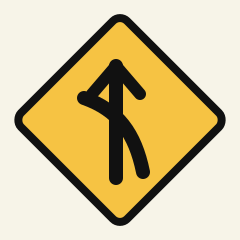
What is the safest CDL response to this merge warning sign?
Merge warning
Merge signs tell a CDL driver to update the traffic picture early. Mirror checks, speed control, lane awareness, and extra space reduce last-second conflicts.
Study focusUse road signs to make early route, speed, space, and clearance decisions.
Common trapReacting late to merging traffic instead of building space before the conflict point.
Question 5
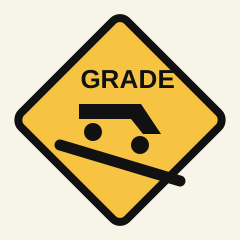
What should a CDL driver do before entering the steep grade shown by this sign?
Steep grade warning
Grades require planning before the vehicle is committed downhill. The safe answer is to slow first, choose control early, and avoid riding or overheating the brakes.
Study focusUse road signs to make early route, speed, space, and clearance decisions.
Common trapWaiting until speed builds on the downgrade before choosing a control strategy.
Question 6
How far ahead should you be looking while driving a commercial vehicle at highway speeds?
Good drivers look 12 to 15 seconds ahead. At highway speeds, this is about a quarter of a mile. This gives you time to adjust speed or change lanes to avoid hazards.
Study focusChoose safe speed, spacing, and visual search habits for commercial vehicles.
Common trapDriving at passenger-car speeds without accounting for weight, space, weather, or grade.
Question 7
When is it appropriate to use your high beams?
Use high beams whenever you can to see further ahead, provided it is safe and legal. You must dim them when within 500 feet of an oncoming vehicle or when following another vehicle within 500 feet.
Study focusApply core CDL safe-driving rules to common road and vehicle situations.
Common trapMemorizing rules without applying them to driving scenarios.
Question 8
Why should you avoid using the engine brake (Jake brake) on wet or icy roads?
Engine retarders (Jake brakes) apply strong braking force to the drive wheels only. On slippery surfaces, this sudden braking force can cause the drive wheels to lose traction, leading to a dangerous skid.
Study focusRespond safely to hazards, emergencies, traction loss, and unsafe conditions.
Common trapReacting late or using sudden braking/steering when controlled action is safer.
Question 9
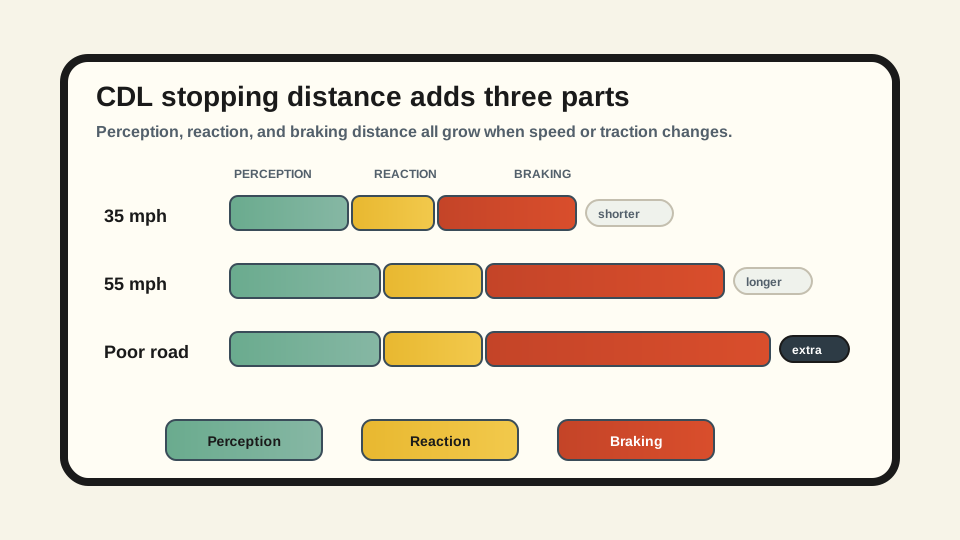
What is the recommended following distance for a heavy vehicle traveling at 55 mph in ideal conditions?
Stopping distance includes perception, reaction, and braking time.
The rule of thumb is 1 second of following distance for every 10 feet of vehicle length at speeds under 40 mph. For speeds over 40 mph, add 1 additional second. A 60-foot truck at 55 mph needs 7 seconds of space.
Study focusChoose safe speed, spacing, and visual search habits for commercial vehicles.
Common trapDriving at passenger-car speeds without accounting for weight, space, weather, or grade.
Question 10
Which of these is a sign of distracted driving?
Eating, using a phone, or reading while driving are major physical and cognitive distractions that take your eyes, hands, and mind away from the critical task of driving.
Study focusRespond safely to hazards, emergencies, traction loss, and unsafe conditions.
Common trapReacting late or using sudden braking/steering when controlled action is safer.
Question 11
What should you do if you are being tailgated?
If you are being tailgated, increase the space in front of your vehicle. This allows you to brake more smoothly and gradually, reducing the chance that the tailgater will crash into your rear.
Study focusChoose safe speed, spacing, and visual search habits for commercial vehicles.
Common trapDriving at passenger-car speeds without accounting for weight, space, weather, or grade.
Question 12
When approaching a curve, what is the best way to handle your speed?
You should brake to a safe speed before entering a curve. Once in the curve, maintain speed or accelerate slightly, as this helps stabilize the vehicle. Never brake hard in a curve.
Study focusChoose safe speed, spacing, and visual search habits for commercial vehicles.
Common trapDriving at passenger-car speeds without accounting for weight, space, weather, or grade.
Question 13
What must you do when placing warning devices (triangles) on a two-lane road with traffic in both directions?
Warning-device placement depends on road type and traffic direction.
On a two-lane road carrying traffic in both directions, place warning devices within 10 feet of the front or rear corners, about 100 feet behind, and about 100 feet ahead of the vehicle.
Study focusRespond safely to hazards, emergencies, traction loss, and unsafe conditions.
Common trapReacting late or using sudden braking/steering when controlled action is safer.
Question 14
When driving a commercial vehicle, how should you adjust your speed for driving at night?
At night, your visibility is limited to the reach of your headlights. You must adjust your speed so you can safely stop within that visible distance.
Study focusUse inspection habits to catch unsafe defects before driving.
Common trapChecking only obvious items and missing brake, tire, coupling, or defect-report steps.
Question 15
What is the most important reason for inspecting your vehicle?
While avoiding fines is good, safety is the primary reason for inspections. A defect found during an inspection can prevent a breakdown or fatal crash.
Study focusUse inspection habits to catch unsafe defects before driving.
Common trapChecking only obvious items and missing brake, tire, coupling, or defect-report steps.
Question 16
If you must pull over to the shoulder on a highway, how quickly must you place your warning devices?
Federal regulations require that emergency warning devices (like reflective triangles) be placed within 10 minutes of stopping on the shoulder or traveled portion of the road.
Study focusRespond safely to hazards, emergencies, traction loss, and unsafe conditions.
Common trapReacting late or using sudden braking/steering when controlled action is safer.
Question 17
What should you do if your vehicle begins to hydroplane?
To recover from hydroplaning, release the accelerator and push in the clutch. Do not use the brakes, as this can cause the wheels to lock and result in a skid.
Study focusRespond safely to hazards, emergencies, traction loss, and unsafe conditions.
Common trapReacting late or using sudden braking/steering when controlled action is safer.
Question 18
What is black ice?
Black ice is a thin layer of clear ice. Because it is clear, you can see the dark asphalt underneath, making the road appear wet rather than icy.
Study focusRespond safely to hazards, emergencies, traction loss, and unsafe conditions.
Common trapReacting late or using sudden braking/steering when controlled action is safer.